Starvard University · Boundaries 101
Mr. Finley has watched forty years of people trouble walk through his door. Now he teaches what he learned: how to set boundaries, how to keep them, and how to spot the folks you need less of in your life. Including the 1-to-100 rule.

Mr. Finley introduces the course. Thirty-seven seconds. Pull up a chair.
The whole course in 60 seconds
The twelve lessons
Lesson 1
In forty years of law, most of the trouble people brought to my door was not legal trouble. It was people trouble. And nearly every case had the same root: no fence. Someone took and took, and nobody ever said stop.
A boundary is not a wall. Walls keep everyone out, including the good folks. A boundary is a fence with a gate. You decide what comes through. That is not selfishness. That is stewardship of the one life you get.

Lesson 2
Here is the tool I give everyone, and I give you permission to use it: score the people in your life from 1 to 100. Not on success or charm. On how you feel after spending time with them. Energized or drained? Respected or small? Lighter or heavier?
Be honest. Some people are 85s: you leave glowing. Some are 30s: you leave exhausted, criticized, or used. A 30 is not a bad person necessarily, but they are not good for you. And here is the part people resist: you are allowed to act on the score. Less time, less access, less of your heart.
Score everyone. Then build your calendar around the 70s and above.

Lesson 3
Toxic is a strong word, so let us be precise. Watch for patterns, not bad days. The patterns: constant criticism disguised as jokes, keeping score of favors, guilt as a leash, disappearing when you need them and appearing when they need you, and making everything about them.
One incident is a bad day. Five is a pattern. A pattern is a preview. Believe the preview. You would not sign a contract with a clause that said "I will disrespect you regularly." Do not accept it without the paperwork either.
Lesson 4
The reason good people struggle with boundaries is guilt. You say no, and a voice says you are selfish, unkind, a bad friend. That voice is lying, but it is loud.
Here is the truth I have told a thousand clients: guilt is not a compass. It is a habit, usually installed in childhood by people who benefited from your compliance. You can feel guilty and still hold the line. The feeling passes. The boundary protects you for years.
Lesson 5
No is a complete sentence. But if that feels too blunt, borrow these: "That does not work for me." "I can't commit to that." "Let me think about it" (then do not). "No, but I hope it goes well."
Three rules. One: do not over-explain. Explanations are handles people grab to argue. Two: do not apologize for the no itself; you can be warm without being sorry. Three: say it once. Repeating yourself invites negotiation, and a boundary is not a negotiation.
Lesson 6
Time is the one asset you cannot earn back, and it is the first thing boundary-crossers spend. The chronic late-caller. The "quick question" that takes an hour. The drop-by that never ends.
Plain English: put your time in writing. Office hours, call windows, a real calendar with real edges. "I have twenty minutes" said at the start beats an hour of resentment at the end. And the phone has a silence button. It is there for a reason.

Lesson 7
Money and people mix like oil and water, unless there are clear lines. Do not lend what you cannot gift. Do not co-sign unless you can pay the whole thing tomorrow. Do not go into business on a handshake, no matter how long you have known them.
I have watched friendships die over $500 loans more times than I can count. The rule that saves them: if you want to help, give what you can afford to never see again, and say so. "This is a gift, not a loan." Clean, kind, final.
Lesson 8
Family is where boundaries matter most and cost most. The parent who criticizes your life. The sibling who only calls when in trouble. The holiday gathering that ruins your week.
Plain English: you can love someone and limit them. Shorter visits. Neutral locations. Topics that are off the table, stated kindly in advance. "We are not discussing my career at dinner, and if it comes up, we will head out early." Then do it, kindly, the first time. Family learns the fence the same way everyone does: by touching it.
Lesson 9
Work will take everything you do not fence off. The 10pm emails. The "urgent" that is not. The promotion dangled to extract weekends.
Plain English: decide your hours and keep them like appointments. Answer after-hours messages in the morning, visibly, so the pattern sets. "I don't check email after seven" is a complete policy. And document everything with difficult colleagues: dates, words, witnesses. Paper remembers what memory softens.
Lesson 10
A boundary without a consequence is a suggestion. So every boundary needs its "then": "If you raise your voice, I will end the call." "If you are late again, we will meet without you." "If you borrow money, the answer will be no from now on."
Then the hard part: enforce it the first time, calmly, without anger. Anger makes it a fight. Calm makes it a fact. Most people only test the fence once. The ones who keep testing have told you their score. Believe them.
Lesson 11
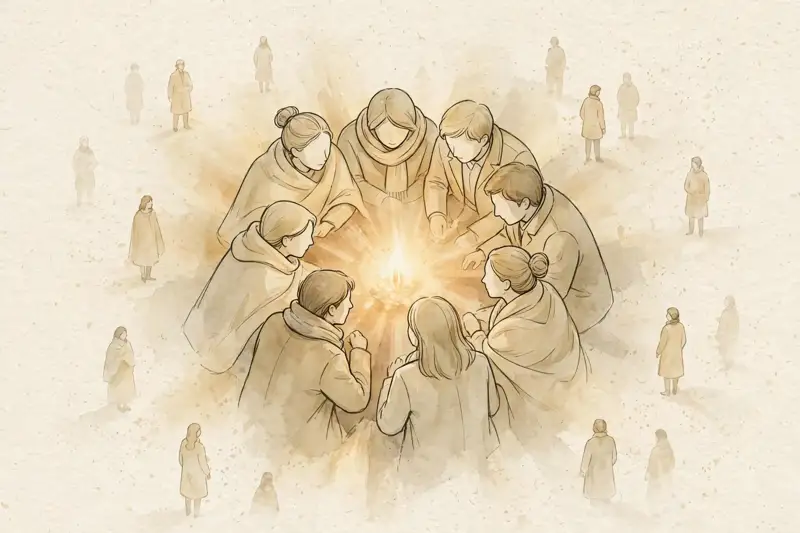
Boundaries are not only about keeping people out. They are about choosing who gets in close. Your 70s and above: the ones who celebrate your wins without envy, tell you hard truths kindly, and show up when it costs them something.
Invest there on purpose. Call them first. Show up for them. Tell them what they mean to you, out loud, while they can hear it. A life rich in 80s needs very few fences, because the right people do not climb them.
Lesson 12
Once a year, sit down with tea and do the audit:
Graduation
Fence, not wall. Score honestly, and act on the score. No is a complete sentence. Consequences, calmly enforced. And build your life around your 70s, the people who make you lighter. Forty years of watching people trouble taught me this: peace is not found, it is fenced. Now go build your fence.
Keep learning
This course is part of Starvard University, striving for greatness.