Starvard University · Get Customers 101
Chadwick finds customers for a living. No spam, no tricks, no cold garbage. Just genuine value, delivered first. Twelve lessons on getting customers the ethical way.

Chadwick introduces the course. Thirty-four seconds. Let us get you customers.
The whole course in 60 seconds
The twelve lessons
Lesson 1
Lesson one is the ethics, because everything else collapses without it. Here is the rule: never contact someone unless you genuinely believe you can help them. Not "maybe." Genuinely.
Spam is contacting a hundred people hoping one bites. Value-first is contacting ten people you have actually researched, with something useful in hand. It is slower per message and faster per customer, because trust compounds and spam burns.
If you would be embarrassed for the prospect to forward your message to their friends, do not send it. That is the whole ethics course.

Lesson 2
"Small business owners" is not a customer. "Dentists in Denver with broken websites who lose patients to competitors" is a customer. The more specific, the easier everything gets: your message writes itself, your offer sharpens, your prospecting takes minutes.
Write it down in one sentence: who they are, what hurts, what it costs them. If you cannot name the pain in their words, you do not know them well enough yet. Go talk to five of them before you sell to one.
Lesson 3
Do not hunt customers across the wilderness. They gather in watering holes: Facebook groups, Reddit threads, church bulletins, trade shows, the Chamber of Commerce, the comments of a popular blog in their industry.
Pick two watering holes and become a regular. Answer questions. Be useful. Do not pitch for a month. When you finally mention what you do, you are not a stranger, you are the helpful person from the group.
Lesson 4
Your offer is not your product. It is the painful problem you remove. "I build websites" is a product. "I fix the broken booking form that is costing you three patients a week" is an offer.
One problem, one promise, one price. If your offer needs a paragraph to explain, it is three offers wearing a trench coat. Cut it down until a twelve-year-old gets it.
Lesson 5
The most ethical and most effective move in sales: demonstrate the value before asking for money. A roofer films the hail damage on the prospect's own roof. A web designer sends a two-minute video showing exactly what is broken on their site.
This is not free work. It is proof of work. Five minutes of specific, personal proof beats fifty generic cold emails. The prospect thinks: if the free stuff is this good, the paid stuff must be great.

Lesson 6
The anatomy of a message that works: one line proving you did homework ("noticed your booking page throws an error on mobile"), one line of value (a screenshot, a quick fix, a useful observation), one soft question ("worth a 10-minute call Tuesday?").
Under 100 words. No "I hope this finds you well." No life story. No attachments. Personal beats polished: a slightly rough, clearly hand-written note outperforms a slick template every time.
Lesson 7
Here is the industry's worst-kept secret: most sales happen between the fifth and twelfth contact, and most sellers quit after one or two. Following up is not pestering if every touch adds something: a new observation, a useful link, a result for someone like them.
Space them out: day 3, day 7, day 14, day 30. Each one short, each one new. And always give them an easy out ("if this is not a priority, just say so"). Paradoxically, the easy out gets more replies, because it proves you are a human, not a sequence.
Lesson 8
You got the call. Now shut up, mostly. The best sales call is 70% listening: what hurts, what have they tried, what does solving it look like, what happens if nothing changes.
Ask, then actually listen, then repeat back what you heard. People buy from those who understand them. At the end, summarize their problem better than they stated it, then offer the one-promise solution. If it is not a fit, say so. Walking away from bad fits is how you keep your reputation, which is the whole business.
Lesson 9
Confusing pricing kills deals. One package, one price, or at most three clear tiers. Price on the value of the solved problem, not your hours: if you save a dentist three patients a week, that is worth thousands a month, so do not charge $200.
Say the price plainly and then stop talking. The silence feels eternal and lasts about four seconds. Whoever speaks first loses. Let them think.
Lesson 10
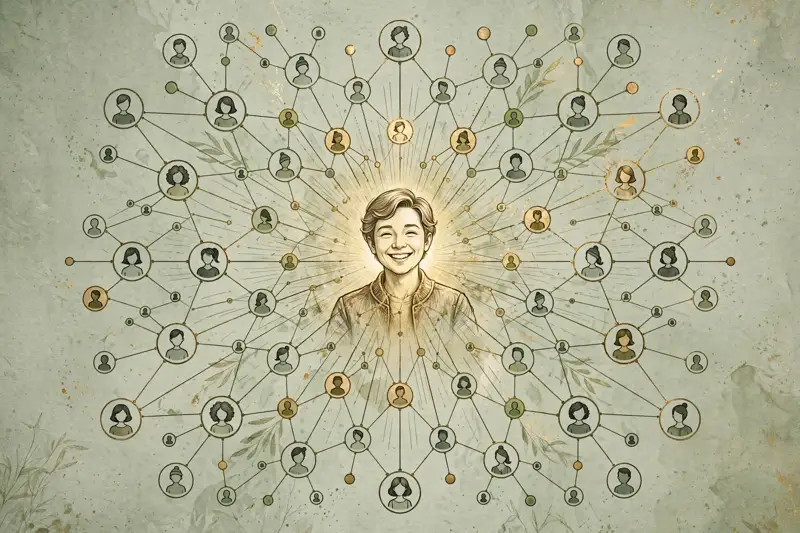
A referred customer costs you nothing, trusts you in advance, and buys faster. It is the cheapest channel that exists, and most businesses never ask.
Ask at the peak of happiness: right after a win, a compliment, a result. Make it specific: "Who do you know with the same booking-page problem you had?" One name beats "anyone." Then thank them like royalty when it lands, a note, a gift, a public shout-out. Referrers who feel appreciated refer again.
Lesson 11
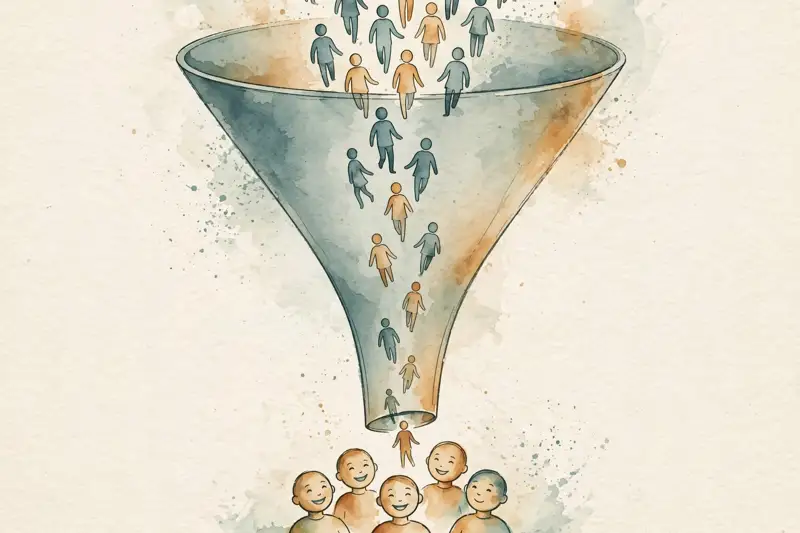
Customer getting is not a campaign. It is a habit. The system: every week, 10 new prospects researched, 10 value-first messages sent, follow-ups on everyone from prior weeks, one watering hole visited, one ask for referrals.
Track it on one page: name, pain, last touch, next touch. Ninety minutes a day beats a frantic monthly blitz. Pipelines are built drop by drop, and they compound like interest.
Lesson 12
The whole course in one checklist. Do this in order:
Graduation
Know exactly who hurts. Show up where they gather. Prove it before you pitch. Follow up like a human. Ask for referrals at the happy peak. Do it weekly, relentlessly, ethically. Customers are not collected, they are earned, one genuine act of value at a time. Go earn them.
Keep learning
This course is part of Starvard University, striving for greatness.