Starvard University · Gardening
You put a tiny seed in dirt, and food comes out. It never stops feeling like magic. This course teaches the real fundamentals: soil, water, sun, timing, and what to plant first so you succeed fast.

The whole course in brief
Twelve lessons in ten points. The rest is sunshine.
The twelve lessons
Lesson 1
A homegrown tomato tastes like a different species than a store tomato. It was picked ripe this morning instead of green last week. That flavor gap is the whole argument for gardening, and no grocery store can close it.
It is also shockingly economical. A $3 packet of lettuce seed grows $50 worth of salad. Herbs are the best deal of all: a $4 basil plant produces what would cost $60 in those little plastic grocery packs. The garden pays for itself by midsummer.
And then there is the part nobody advertises: gardening is good for your head. Twenty minutes with your hands in soil after a day of screens resets something fundamental. Gardeners have known this forever. Science is just catching up.
Lesson 2
Most beginners overwater. Soggy soil suffocates roots and invites disease. The rule: water deeply, then let the top inch or two of soil dry before watering again. Stick your finger in the soil. It is the most accurate moisture meter ever made.
Deep watering grows deep roots, which makes plants resilient in heat. Shallow daily sprinkles grow shallow roots that panic at the first hot afternoon. When you water, soak the root zone thoroughly, not just the surface.
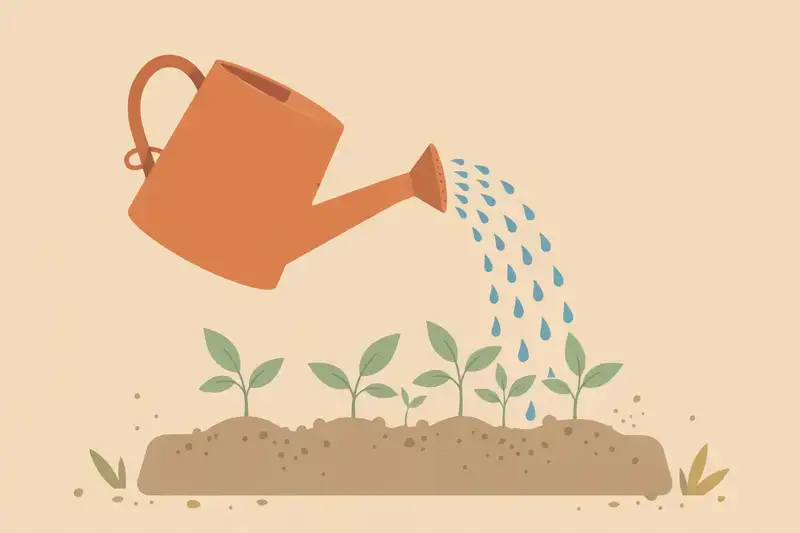
Water in the morning. Leaves dry quickly in the sun, which prevents fungal disease, and plants face the heat of the day fully hydrated. Evening watering is the backup plan; midday watering mostly evaporates.
Lesson 3
Your USDA hardiness zone (or your country's equivalent) tells you which plants survive your winter and when your growing season runs. It is the single most important number in gardening. Look it up before buying a single seed.
Equally important: your first and last frost dates. These bookend the growing season. Warm-season crops (tomatoes, peppers, basil) go out after the last frost. Cool-season crops (lettuce, peas, carrots) go in before it and again as fall approaches.
Local knowledge beats generic advice. Your county extension service publishes planting calendars tuned to your exact area, usually for free. A five-minute search for your county plus "planting calendar" is worth more than any national gardening book.
Lesson 4
Plants do not grow in dirt; they grow in soil, which is a living ecosystem. The difference is organic matter. Mix several inches of compost into your beds each year and you fix drainage in clay, water retention in sand, and fertility everywhere. Compost is the closest thing to a miracle the garden offers.
Test before you guess. A basic soil test (cheap through your extension service) tells you pH and nutrient levels. Most vegetables want slightly acidic to neutral soil, around 6.0 to 7.0. Amending blindly wastes money; testing costs less than one bag of the wrong fertilizer.
Never work soil when it is soaking wet. Squeeze a handful: if it forms a muddy ball that does not crumble, wait. Working wet soil destroys its structure for the whole season. Patience here pays all summer.
Lesson 5
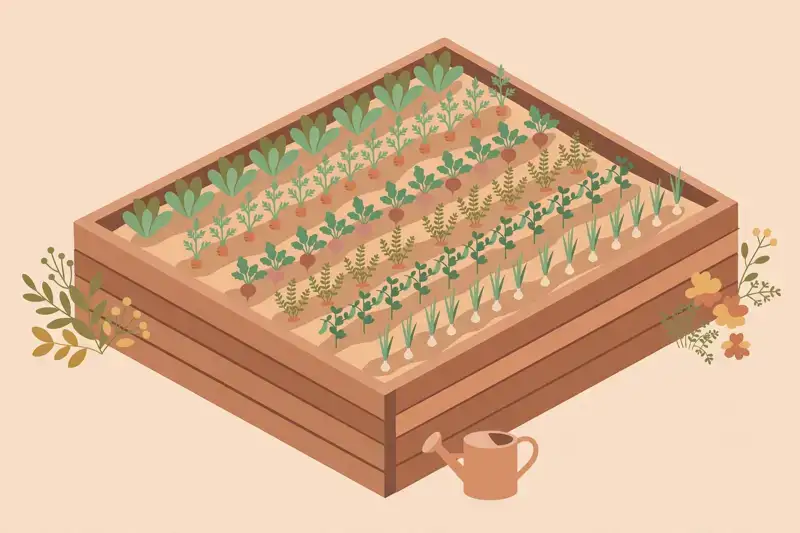
Raised beds are the beginner's best friend. You control the soil completely, drainage is excellent, they warm up faster in spring, and you never compact the soil by stepping on it. A 4x8 foot bed, one foot deep, is the perfect starter size: reachable from both sides without stepping in.
Fill beds with a mix, not bagged topsoil alone: roughly equal parts topsoil, compost, and aeration (like coarse perlite or rice hulls). Good soil from day one is why raised beds outperform in-ground plots for beginners.
No yard? Containers work beautifully. Herbs, lettuce, peppers, and cherry tomatoes all thrive in pots. Use containers at least 12 inches deep, with drainage holes, and water them more often than beds: pots dry out fast. A sunny balcony is a legitimate farm.
Lesson 6
Some crops practically plant themselves: beans, peas, lettuce, carrots, radishes, and squash go straight in the ground and germinate reliably. Direct-seed these. It is cheap, simple, and deeply satisfying.
Slow crops (tomatoes, peppers, eggplant) need a head start indoors in cold climates: 6 to 8 weeks before last frost, under lights, in seed-starting mix. A sunny windowsill is rarely enough light; an inexpensive shop light hung inches above the seedlings prevents the leggy, weak starts that doom transplants.
Read the seed packet. It tells you depth, spacing, days to germination, and days to maturity: everything you need. Seed packets are the most under-read instruction manuals in existence. The answers are right there.
Lesson 7
Beginners should buy transplants for the slow crops. A $4 tomato seedling skips six weeks of indoor fussing and the most failure-prone stage. There is no prize for doing everything from seed in year one. Buy the head start.
Shop for stocky, deep-green seedlings, not the tallest ones. Tall and pale means light-starved and weak. Check under the leaves for pests before bringing them home; you do not want to import someone else's aphid problem.
Harden off before planting out: a week of gradually increasing outdoor time toughens seedlings for real sun and wind. Plant on a cloudy afternoon, water deeply, and mulch immediately. Transplant shock is real but brief with proper hardening.
Lesson 8
Most vegetables need at least six hours of direct sun daily; tomatoes and peppers want eight. Before planting, spend a day watching your yard: where does sun fall at 9 a.m., noon, 4 p.m.? The sunniest spot wins the vegetable garden, no matter how convenient another spot would be.
Remember the sun moves. A spot sunny in April may be shaded by a leafed-out tree in June. Watch through the season or ask what the yard looked like last summer. Southern exposures (in the northern hemisphere) get the most light.
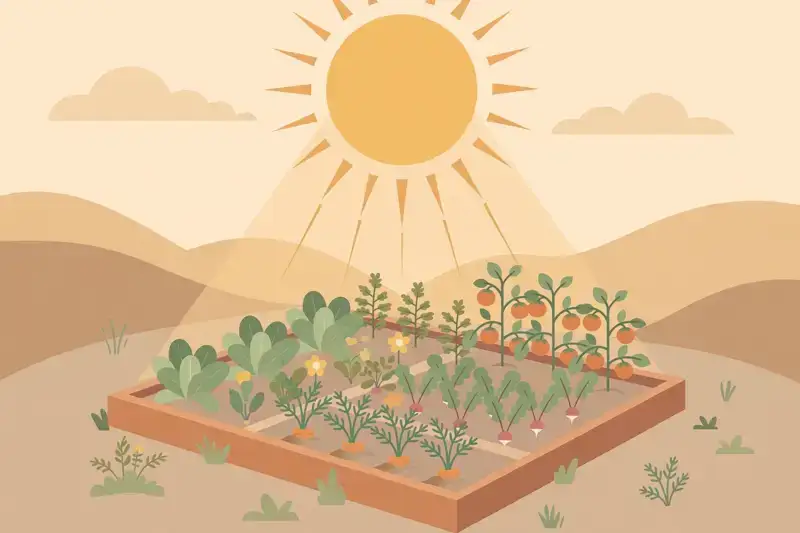
Shady spots are not wasted. Lettuce, spinach, kale, herbs, and carrots tolerate partial shade, and in hot climates afternoon shade is a blessing that extends the lettuce season by weeks. Match the crop to the light you have.
Lesson 9
Mulch is the weed solution. Three to four inches of straw, wood chips, or shredded leaves around (not touching) your plants suppresses nearly all weeds, holds moisture, and feeds the soil as it decomposes. The gardeners with the fewest weeds are not weeding more; they are mulching.
For pests, start with the gentlest effective method: row cover fabric excludes insects entirely, hand-picking handles caterpillars and beetles, and a strong spray of water knocks aphids off. Most pest problems are solved without any spray at all.
Invite the predators. Flowers like alyssum, dill, and marigolds attract beneficial insects that eat the bad ones. A garden with flowers is a garden with bodyguards. And accept some losses: 10 percent to the bugs is the garden's tax. Perfection is not the goal; dinner is.
Lesson 10
Year one is about wins, so plant the easy all-stars: cherry tomatoes, zucchini, green beans, lettuce, radishes, and herbs (basil, parsley, chives). These germinate eagerly, forgive mistakes, and produce fast. Nothing builds a gardener like early success.
Grow what you actually eat. A bumper crop of kale nobody touches is a failure disguised as success. Look at your grocery cart: the fresh things you buy weekly are your planting list. The garden should shrink your grocery bill, not your enthusiasm.
Skip the divas in year one: cauliflower, artichokes, and watermelons in short seasons all demand expertise. You will get there. Year one belongs to the generous, forgiving crops that make you feel like a natural.
Lesson 11
Gardening needs less gear than the garden center suggests. The essentials: a trowel, a hand fork, a full-size shovel, a rake, pruners, a hoe, a watering can or hose with a gentle nozzle, and gloves. That kit handles nearly everything in a home garden.
Buy the best pruners you can afford; cheap ones crush stems and hurt your hands. For everything else, mid-range is fine. Clean tools after use and oil the metal yearly; a maintained cheap shovel outlasts a neglected expensive one.
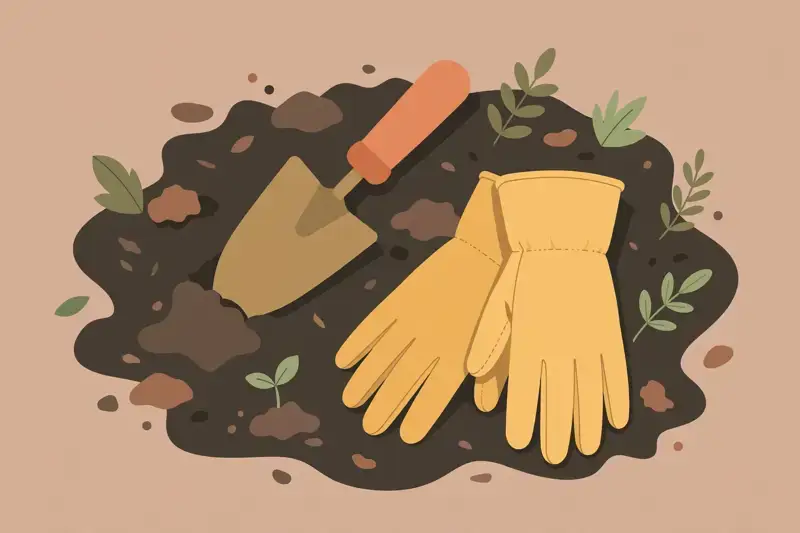
A kneeling pad or knee pads will save your joints and extend your gardening years. Comfort is not luxury; it is what keeps you coming back to the garden instead of dreading it.
Lesson 12
Spring: prepare beds, plant cool-season crops early, start warm-season seeds inside, then transplant after last frost. This is the busy season; everything happens now. Summer: water deeply, mulch, harvest constantly (daily for zucchini and beans), and plant fall crops mid-summer.
Fall: plant garlic and cover crops, extend the season with row cover, harvest the last warm-season crops before first frost, and compost the spent plants. Winter: plan next year, order seeds, maintain tools, and rest. The garden sleeps; the gardener dreams.
Keep a garden journal: what you planted, when, where, and how it did. Next year's planting decisions get dramatically better with one year of notes. Memory lies; the journal does not.
Graduation
You know the fundamentals: feed the soil, water deeply, give them sun, plant on time, mulch everything, and start with the easy wins. The seed does the miraculous part. Your job is just to give it a fair chance. Dinner is coming.
Keep learning
This course is part of Starvard University, striving for greatness.