Starvard University · Health 101
No gurus. No gadgets. No diets with names. Just the simple basics the world's top health scientists agree on, written for a normal human being. By Chadwick.

Chadwick introduces the course. Twenty-five seconds. Believe!
The whole course in 60 seconds
Everything the top scientists agree on, in one yellow box.
The twelve lessons
Lesson 1
The health industry wants you confused. Confused people buy powders, plans, and programs. But the world's top health scientists, the ones who actually run the studies, agree on the basics, and the basics are boring.
Eat real food. Move your body daily. Lift something heavy sometimes. Sleep enough. That is nearly the entire science of being healthy. Everything else is details, and most of the details do not matter much.
Lesson 2
Here is the whole nutrition science in one sentence: eat mostly things that grew, walked, or swam, and less stuff that came from a factory.
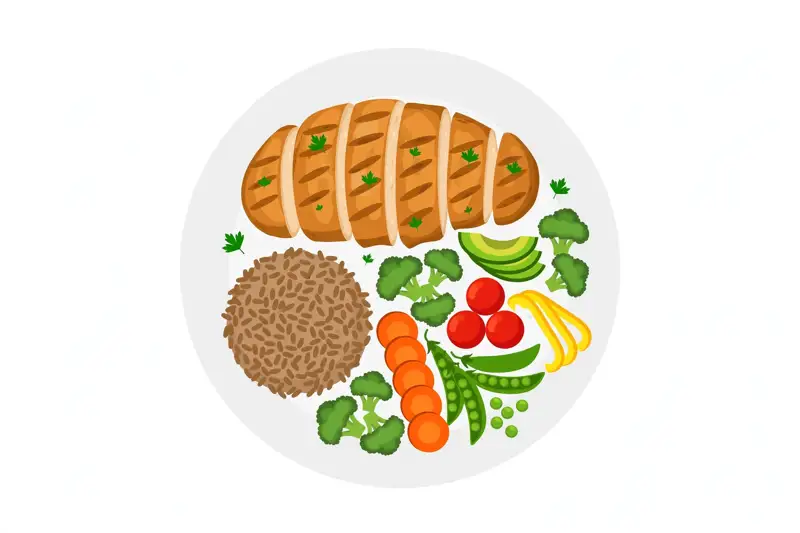
Build your plate like this: half vegetables, a quarter protein (chicken, fish, eggs, beans), a quarter whole grains or potatoes. Do that most of the time and you have beaten 90 percent of diets ever sold.
Lesson 3
If there is one nutrient the scientists agree matters most, it is protein. It keeps you full, protects your muscles, and most people do not eat enough of it.
Aim for a palm-sized portion of protein at every meal. Chicken, fish, eggs, Greek yogurt, beans, lentils. You do not need to count grams. Just make protein the first thing on the plate, not the afterthought.
Lesson 4
Sugar is not poison, but it is everywhere, and the liquid kind is the worst. One soda has more sugar than anyone needs in a day, and your body barely registers it.
The simplest fix in this whole course: stop drinking your sugar. Water, coffee, tea. Keep the desserts you love, just eat them instead of drinking them. That one change does more than most diets.
Lesson 5
Your body is mostly water and it complains when it runs low: headaches, tiredness, fake hunger. Most adults walk around slightly dehydrated.
Drink a big glass when you wake up, keep water near you all day, and drink before you feel thirsty. If your urine is pale yellow, you are doing it right. That is the whole lesson.
Lesson 6
Walking is the most underrated exercise on Earth. It burns calories, clears your head, helps you sleep, and you can do it while listening to anything. The scientists' number: 8,000 to 10,000 steps a day.
Do not overthink it. A 30-minute walk after dinner gets you most of the way there. Take stairs, park far, pace on phone calls. Steps hide everywhere.

Lesson 7
Muscle is the organ of longevity. That is a direct quote from the scientists. Strong muscles keep you independent, protect your bones, and burn more energy even at rest.
You do not need a gym membership to start. Twice a week: push-ups, squats, and something heavy you lift and carry. When it gets easy, go heavier. That is strength training.
Lesson 8
Your heart is a muscle too, and it likes to work. The scientists' prescription: about 150 minutes a week of activity that gets you breathing harder. Brisk walking counts. So does cycling, swimming, dancing in your kitchen.
Break it up however you like: 30 minutes, five days a week, or a few longer sessions. If you can talk but not sing, you are in the right zone.
Lesson 9
Sleep is when your body does its maintenance: muscles repair, memories file away, the brain takes out the trash. Short sleep is linked to nearly everything bad. The target: 7 to 9 hours.
The fix is embarrassingly simple: same bedtime every night, even weekends. Dark room, cool room, no phone in bed. Your body loves routine more than anything.

Lesson 10
Get outside in the first hour after waking, even on cloudy days. Morning light sets your body clock, which improves your sleep that night, your energy that day, and your mood overall.
Five to ten minutes is enough. Walk while you are at it and you have combined two lessons. The scientists call this a zeitgeber. You can call it going outside.
Lesson 11
Here is where everyone fails: they try to be perfect, miss one day, and quit. The scientists do not care about perfect. They care about consistent.
Do the basics 80 percent of the time and you get nearly all the benefit. Ate pizza? Fine. Missed a walk? Walk tomorrow. The only real failure is quitting, and quitting usually starts with demanding perfection.
Lesson 12
Do not start everything at once. One thing per day:
Graduation
Eat real food. Walk daily. Lift twice a week. Sleep 7 to 9 hours. Do it 80 percent of the time. That is the entire course, and it is also the entire science.
Keep learning
This course is part of Starvard University, striving for greatness.