Starvard University · Podcasting 101
Anyone can start a podcast. Few make one worth subscribing to. Twelve lessons on concept, recording, and growing a real audience.

The whole course in brief
The twelve lessons
Lesson 1
Every successful podcast can be explained in one sentence. "Two friends rewatch bad movies." "A historian explains one event per episode." If your show needs a paragraph, the concept is mushy, and mushy concepts do not get clicked, shared, or remembered.
Write ten one-sentence versions of your show. Pick the one that makes a stranger say "oh, interesting." That sentence is your show's engine: it guides every episode topic, every guest choice, every title. When you are unsure about an episode idea, check it against the sentence. If it does not fit, it is a different show.
Specificity wins. "A business podcast" is nothing. "Interviews with bakery owners about their first year" is something. You can always broaden later; you cannot un-bore a listener who already left.
Lesson 2
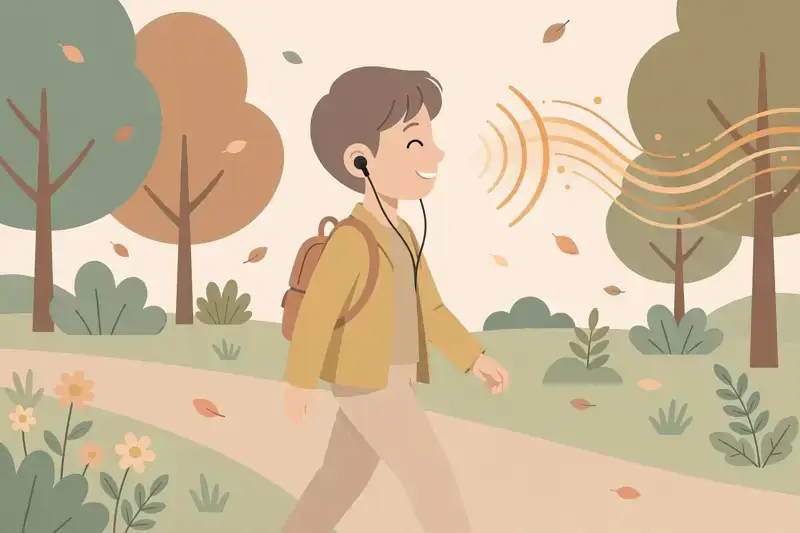
Picture one person listening. Where are they? Probably commuting, walking, doing dishes. They have chosen your voice to fill that time, which is intimate and precious. Write every episode for that person: what do they care about, what do they already know, what would make their walk better?
This focus changes everything. A show "for entrepreneurs" is vague; a show "for first-time founders working from their kitchen table" writes itself. The narrower the listener, the stronger the connection, and paradoxically, the bigger the audience grows. People share shows that feel made for them.
Lesson 3
You need a decent USB microphone, headphones, and free recording software. That is the whole list. A $70 USB mic in a quiet closet beats a $500 mic in an echoey kitchen. Spend your energy on the room, not the gear.
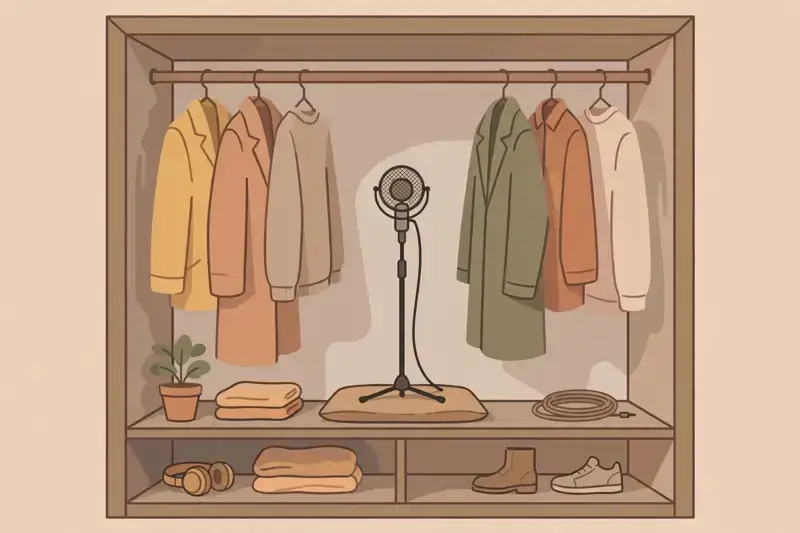
Record in the smallest, softest room available. Closets full of clothes are legendary podcast studios for a reason: fabric kills echo. Turn off anything that hums. Put your phone on airplane mode. These free moves improve your sound more than any upgrade.
Do not buy more gear until you have published ten episodes. By then you will know what you actually need, instead of what forums told you to want. Gear is the easiest form of procrastination in podcasting.
Lesson 4
Rambling is not a format. Every episode needs a skeleton: a cold open or hook, an intro, the main segments, and a close. Listeners relax into structure; they can enjoy the content because they are not wondering what is happening.
Design two or three recurring segments. Segments give episodes rhythm and give listeners something to look forward to: the opening story, the main interview, the rapid-fire questions at the end. Recurring bits become beloved rituals that keep people coming back.
Time-box loosely. If episodes vary wildly in length, listeners cannot fit you into their routine. Pick a target length and hit it within ten minutes either way. Predictability is a feature, not a cage.
Lesson 5
Before you hit record, do a thirty-second test and listen back on headphones. Check for echo, hum, background noise, and mic distance. This one habit prevents more disasters than any piece of equipment. Never record a full episode without a test.
Get close to the mic, about a fist's width away, and stay there. Moving around changes your volume constantly and drives editors mad. Speak across the mic slightly rather than directly into it to soften harsh popping sounds on P and B words.
Lesson 6
Listeners decide in minutes whether your voice is pleasant company. You cannot change your voice, but you can change how you use it: energy, pace, and pauses. Speak like you are telling a friend something fascinating, not reading a report. Smile while you talk; it is audible.
Vary your pace. Slow down for important points, speed up for excitement, and pause before the big reveal. Monotone is not a voice problem; it is an energy problem. Stand up while recording if your energy sags; it opens your chest and brightens everything.
Hydrate and warm up. A glass of water and two minutes of tongue twisters before recording noticeably improve clarity. Professionals warm up; amateurs wonder why they sound tired.
Lesson 7
The golden rule of interviewing: ask short questions, then be quiet. Beginners ask long, rambling questions stuffed with their own opinions, then interrupt the answer. The guest is the show; your job is to set them up and get out of the way.
Prepare questions, then throw half of them away. The best moments come from follow-ups: "Say more about that." "What did that feel like?" "What happened next?" Listen for the interesting thread and pull it. Curiosity beats a script every time.
Do your homework. Nothing kills an interview faster than questions the guest has answered a hundred times. Find the angle they have not discussed, the story behind the story. Guests light up when they realize you actually prepared, and listeners can hear the difference.
Lesson 8
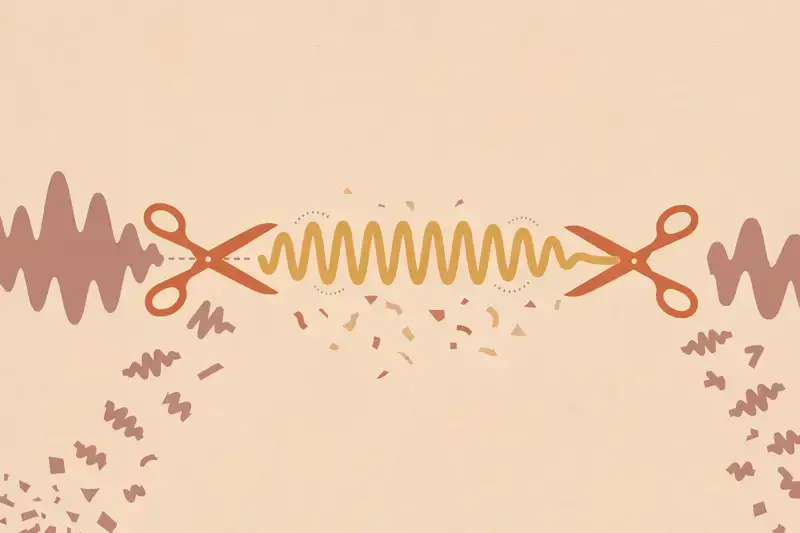
Your raw recording is too long. Every podcast episode should lose at least 20% in the edit: the ums, the false starts, the tangent that went nowhere, the question you asked twice. Tight editing is respectful; it says you value the listener's time.
Edit for pace, not perfection. Leave in the laugh, the genuine pause, the human moments. Cut the filler, the repetition, the dead air. The goal is a conversation that feels natural but never drags, which is to say, better than real conversation.
Lesson 9
Nobody subscribes to a show they never find. Episode titles are your storefront: specific, intriguing, and honest. "Ep 47: Chat with John" gets no clicks. "How a Bakery Survived Its First Year" gets clicks. Write titles for strangers, not for existing fans.
Descriptions matter too. The first two sentences show up in search results and app previews; make them count. Include the guest's name, the topic, and one compelling detail. And pick a hosting service that distributes to all the apps automatically; you publish once, it appears everywhere.
Cover art is your other storefront. It must read clearly at thumbnail size: bold title, simple image, high contrast. If it is illegible on a phone screen, redesign it. Most listeners will first see your show as a tiny square.
Lesson 10
The two growth engines that actually work: guests with their own audiences, and relentless consistency. Every guest you interview brings potential listeners, especially if you make it easy for them to share the episode. Ask every guest to post it; most will.
Consistency is the engine nobody wants to hear about. Weekly episodes for a year will grow almost any decent show, because podcast apps reward reliability and listeners build habits around it. Most podcasts die before episode ten. Surviving is a strategy.
Promote where your listener already is. One platform done well beats five done badly. Clip the best thirty seconds for social, write about the episode where your people gather, and be a guest on other shows. Borrowed audiences become your audience.
Lesson 11
Do not monetize at episode one. You need an audience first, and early ads on a tiny show earn pennies while annoying your first loyal listeners. Build to a few thousand downloads per episode before you think seriously about sponsors.
When the time comes, the options: sponsorships (read ads for relevant products), listener support (memberships or donations), and selling your own stuff (courses, books, services). The last one usually earns the most per listener. A thousand true fans buying your $50 thing beats ad pennies.

Lesson 12
Your assignment: record, edit, and publish your first episode this week. Not a trailer, not a "coming soon." A real episode, following your format, with your one-sentence concept. It will be rough. Publish it anyway.
Tell five people. Not five hundred, five. Get their honest feedback with specific questions: where did you get bored, what was confusing, would you listen again? Use it to make episode two better.
Then commit to twenty episodes before you judge anything. The show you imagine and the show you actually make are different things, and the real one is usually better. It just takes twenty episodes to meet it.
Graduation
You know the playbook: a one-sentence concept for a specific listener, minimal gear in a soft room, structured episodes, an energized voice, curious interviewing, tight editing, clickable titles, guests and consistency for growth, money later, and twenty episodes before judgment. The mic is waiting. Your listener is commuting right now.
Keep learning
This course is part of Starvard University, striving for greatness.