Starvard University · Project Management 101
Ship things on time without losing your mind. Project management is not paperwork; it is the craft of turning a big scary goal into small done steps.

The whole course in brief
The twelve lessons
Lesson 1
Every project needs a written definition of done before it starts. Not a vibe, a sentence: "Done means the new checkout page is live, tested, and processing real orders." Without that, the project expands forever, because nobody can tell you when you have arrived.
Write it down and get everyone to agree. This one paragraph prevents half of all project arguments. When someone asks for more, you can point at the definition and ask: "Is this in scope?" That conversation is the entire job of managing a project.
Lesson 2
Big tasks paralyze people. "Launch the new website" sits on a to-do list for weeks because nobody knows the first step. "Write the homepage headline" takes twenty minutes and gets done today. Same project, different granularity, completely different outcome.
Break every project into tasks that take a day or less. If a task is bigger than that, it is not a task; it is a project in disguise. Small tasks also make progress visible, and visible progress is the fuel that keeps a team moving.

Lesson 3
Humans are terrible at estimating. Everything takes longer than the optimistic voice in your head says, because that voice forgets interruptions, waiting, and rework. The fix: estimate, then double it. You will still be wrong sometimes, but you will be wrong less.
Work backward from the deadline. Take the final date, subtract review time, subtract buffer, and that is when the real work must finish. And never commit to a date before breaking the work down; a deadline without a task list is a wish.
Lesson 4
Every task needs exactly one owner. One person whose name is next to it, who feels the weight of it. "The team will handle it" means nobody handles it. Shared ownership is shared neglect.
Owners can still get help; owning is not doing everything alone. It means one person is responsible for making sure it gets done. When you assign a task, say the name out loud and get a yes. "Sarah, you own the vendor contract by Thursday. Yes?" That yes is the whole mechanism.
Lesson 5
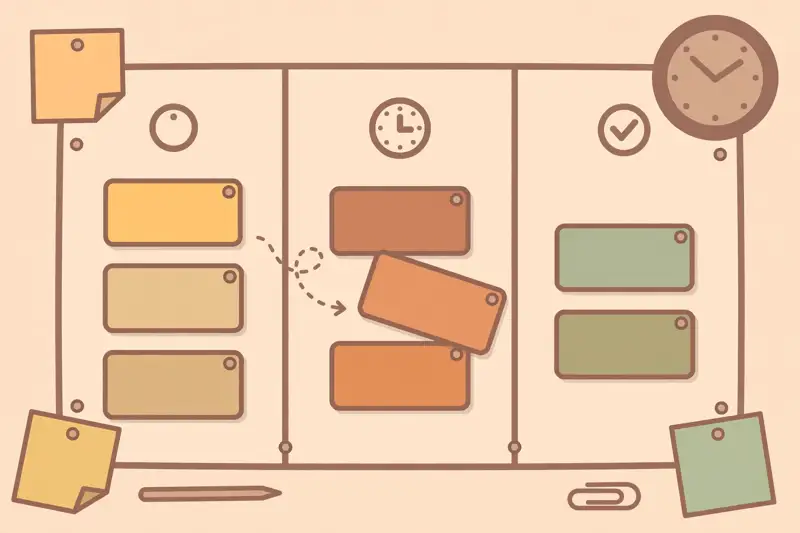
A project tracked in someone's head or a private spreadsheet is a project nobody trusts. Put the work on a shared board: to do, doing, done. Three columns are enough. The board is the single source of truth, and it ends the "wait, where are we on this?" meetings.
Update it as work happens, not at the end of the week. A stale board is worse than no board, because it lies confidently. Two minutes of updating saves twenty minutes of status archaeology.
Lesson 6
Most project surprises are communication failures. The fix is a rhythm: a short weekly update, same format every time. What got done, what is next, what is blocked. Three bullets. Nobody reads long status reports, but everyone reads three bullets.
Raise problems early and in the open. Bad news does not get better with age, and hiding a delay just compresses the panic into the final week. The team that hears about trouble early can help. The team that hears about it late can only blame.
Lesson 7
At the start of every project, ask the team: "What could go wrong?" Write the answers down. The vendor might be late, the key person might get sick, the requirement might be misunderstood. Then for each one, decide: prevent it now, or have a plan B.
This is not pessimism; it is cheap insurance. Fixing a risk at the start costs a conversation. Fixing it at the end costs the deadline. The projects that look effortless are the ones where someone worried early.
Lesson 8
Scope creep is how projects die: a slow drip of "just one more thing" until the deadline is a joke. Every addition has a cost in time and focus. Your job is to make that cost visible: "Sure, we can add that. It moves the date by a week. Still want it?"
This is not saying no to everything; it is making tradeoffs explicit. Sometimes the new thing is worth it. But it should be a decision, not an accident. Guard the definition of done you wrote in lesson one; it is your shield.
Lesson 9
Stakeholders are the people with opinions about your project who are not doing the work: bosses, clients, other teams. They are not the enemy; they are the audience. Keep them informed on your rhythm, and most of their anxiety disappears.
When stakeholders disagree, do not let them fight through you. Get them in the same conversation and make the tradeoff visible: "We can have it fast or we can have it fancy. Which one?" People accept decisions they helped make. Your job is to make the decision clear, not to please everyone.
Lesson 10
Every project stalls at some point. The fix is almost always the same: make the next step smaller. If a task has sat untouched for a week, it is too big or too vague. Break it in half, clarify the first action, and watch it move.
If the whole project is stuck, look for the real blocker: a decision nobody will make, a person who is overloaded, a requirement nobody understands. Name it out loud. Stuck projects are usually stuck on one thing, and one thing can be fixed.
Lesson 11
Done beats perfect. The last ten percent of polish takes fifty percent of the time, and most of it is invisible to everyone but you. Ship when it meets the definition of done, then improve based on real feedback instead of guesses.
Shipping is a skill. It means declaring something finished, handing it over, and moving on. Teams that ship build momentum and confidence. Teams that polish forever build anxiety. Be the team that ships.

Lesson 12
When the project ends, take thirty minutes with the team and ask three questions: what went well, what went badly, what will we do differently next time. Write the answers down. That is a retrospective, and it is the highest-leverage half hour in project management.
The rules: no blame, just learning. "The testing phase was too short" is useful; "Dave messed up testing" is not. One concrete change per retro is enough. Do this after every project and your team gets visibly better every single time.
Graduation
Define done, break it down, double your estimates, give every task one owner, track it in the open, update on rhythm, worry early, price every addition, keep stakeholders informed, shrink stuck steps, ship at done, and retro every time. That is project management: simple habits, repeated, until shipping on time feels normal. Now go ship something.
Keep learning
This course is part of Starvard University, striving for greatness.