Starvard University · Storytelling 101
Facts change minds slowly. Stories change them fast. Twelve lessons on the oldest technology humans have: telling a story someone remembers.

The whole course in brief
The twelve lessons
Lesson 1
Strip every great story down and you find three parts: someone wants something, and something is in the way. A kid wants a bike, but has no money. A woman wants to change careers, but is terrified. That tension between want and obstacle is the engine. Everything else, setting, dialogue, description, is fuel for that engine.
This is why "here is what happened to me today" often falls flat. It has a character, but no clear want and no obstacle. Before you tell a story, name all three: Who is this about? What did they want? What stood in the way? If you cannot answer, you do not have a story yet. You have an anecdote looking for a point.
The obstacle does not need to be dramatic. Small obstacles make great stories: a flat tire on the way to the interview, a recipe that keeps failing, a fear of calling back. Ordinary obstacles, told well, move people more than epic ones told badly.
Lesson 2
Beginners start stories too early. They give ten minutes of background before anything happens: where they grew up, how they met, what the weather was like. The listener checks out before the story starts. Professionals start as close to the trouble as possible, then fill in background only when the listener needs it.
Compare: "So I have been thinking about running a marathon for years, and back in college I used to jog..." versus "I was at mile 19 and my legs stopped working." The second opening drops you into the action. You will learn the backstory later, if it matters. It probably matters less than you think.
Lesson 3
"We had a nice dinner" is forgettable. "We ate tacos on the tailgate while the sun went down behind the water tower" is a memory. Specific details are what make a story feel real. The brain treats concrete images as experience; it treats abstractions as homework.
You do not need many details. Three good ones beat thirty mediocre ones. Pick the details that do work: the chipped mug, the exact thing someone said, the sound the screen door made. These tiny specifics signal "this really happened," and the listener leans in.
Collect details like a hobby. Notice the weird, the particular, the funny. Write them down. A storyteller with a notebook of specifics never runs out of material, because real life keeps supplying it.
Lesson 4
"He was nervous" tells the listener a conclusion. "He checked his phone six times in two minutes and kept smoothing his tie" shows the evidence and lets the listener reach the conclusion themselves. Shown conclusions stick; told conclusions slide off. People believe what they figure out.
This does not mean never telling. Telling is fast, and sometimes speed is what the story needs: "Three years passed." Use telling for transitions and showing for the moments that matter: the turning points, the emotions, the scenes you want the listener to live inside.
A good test: after any emotional claim, add one concrete image. "She was heartbroken" becomes "She was heartbroken; she kept setting two plates on the table for a week." Now it is a story, not a label.
Lesson 5
Tension is simply a question the listener needs answered. Will she get the job? What is in the box? Did he make the flight? As long as a question hangs open, the listener keeps listening. Close every loop and the story is over, even if you keep talking.
You can plant questions deliberately. Withhold the outcome for a beat: "I opened the envelope, and I just stood there." The listener has to know what was in the envelope. You can also stack loops: resolve one question while opening another, so the listener is always one step behind.
Lesson 6
Most stories die in the middle. The opening hooks, the ending lands, but the middle is a swamp of "and then, and then, and then." The fix: every scene must change something. The character gets closer to the goal or further from it. If a scene changes nothing, cut it.
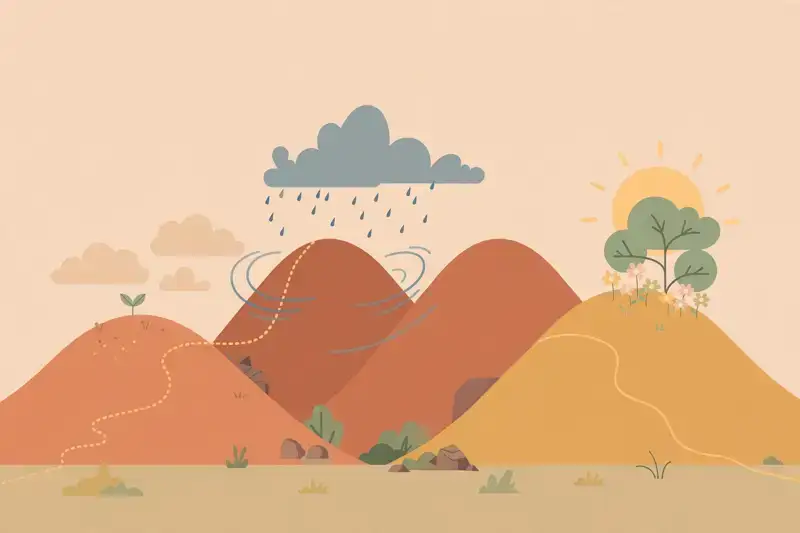
Raise the stakes as you go. The obstacle gets harder, the cost of failure gets clearer, the want gets more urgent. A flat middle means the difficulty stayed flat. Make it worse, then make it worse again, and the listener cannot look away.
When you are stuck in a swampy middle, ask: "What is the worst thing that could happen next?" Then let it happen, or come close. Stories need trouble the way fire needs air.
Lesson 7
Real dialogue is messy: interruptions, half-finished thoughts, people talking past each other. Story dialogue should feel like that, but tighter. Cut the "ums" and the small talk, keep the rhythm and the personality. Read it aloud; if it sounds like a press release, rewrite it.
Dialogue does two jobs: it reveals character and it moves the story. Every line should do at least one. "Nice weather we are having" does neither. But "You are late again" reveals a whole relationship in four words. Let what people say, and what they avoid saying, do the heavy lifting.
Use tags sparingly. "He said" and "she said" disappear; fancy tags like "he exclaimed" distract. And let the words carry the emotion rather than announcing it: instead of "I am so angry," said angrily, try "Fine. Do whatever you want," she said, and closed the door.
Lesson 8
Almost every story ever told fits three acts. Act one: the setup. We meet the character, learn the want, and something disrupts normal life. Act two: the struggle. Obstacles pile up, plans fail, things get worse. Act three: the resolution. The final confrontation, the change, the new normal.
You do not need to be rigid about it. A two-minute anecdote has the same shape in miniature: setup, trouble, turnaround. The shape is a skeleton, not a cage. But when a story feels wrong and you cannot say why, check the shape. Usually act two is too thin or act three arrives too fast.
Lesson 9
Endings fail two ways: they stop too early, leaving the listener unsatisfied, or they keep explaining after the point landed. The sweet spot is the moment of change. The character decides, realizes, or transforms. End there, or one breath after.
The best endings echo the beginning. The character faces the same situation as act one but handles it differently, showing how they changed. This circle gives the listener a feeling of completeness that no plot twist can match.
Resist the urge to explain the moral. "And that is when I learned that persistence pays off" insults the listener; they already got it. Trust the story. Land the change, then stop talking.
Lesson 10
Stories were spoken for thousands of years before anyone wrote them down. Your story will be better if you tell it to a real person before you write it. Speaking forces natural order, natural emphasis, and natural cuts: you feel where the listener leans in and where they drift.
Find a willing friend, or just talk to your phone's voice recorder. Notice where you speed up (that is the exciting part, give it room) and where you skip (that part was boring, cut it). The spoken version is the honest draft; the written version is the polished one.
Performance matters too. Pace, pauses, eye contact, a slower voice at the tense moment: these are storytelling tools, not theatrics. A pause before the reveal is worth a paragraph of description.
Lesson 11
You do not need an extraordinary life to tell great stories. You need extraordinary attention. The DMV line, the awkward elevator ride, the neighbor's dog: all of it is material if you notice the want, the obstacle, and the change. Storytellers are just people who pay attention on purpose.
Keep a story journal. Not a diary, a collection: funny things people said, small disasters, moments that surprised you. Two lines each. Over months this becomes a goldmine, because memory fades but the notebook does not.
Lesson 12
A story without a point is just noise that happened to someone. Before you tell it, know why you are telling it. What should the listener feel, think, or do differently? The point does not need to be grand. "Check your pockets before laundry day" is a fine point for a funny story.
The point shapes every choice: what to include, what to cut, where to linger. Two tellers can tell the same events as a comedy or a tragedy depending on the point. Know yours, and the story tells itself. Lose yours, and no amount of craft saves it.
Finally: the point is for the listener, not for you. A story that only proves you are interesting is a story nobody wants to hear twice. A story that gives the listener something, a laugh, a lesson, a feeling, is a story they will retell. And being retold is the highest honor a story can earn.
Graduation
You now carry the storyteller's toolkit: character, want, obstacle; start late; be specific; show more than tell; keep a question open; make every scene count; write human dialogue; trust the three-act shape; end at the change; speak it first; mine your ordinary life; and always know your point. The rest is reps. Tell stories at dinner, at work, to your friends. The good ones will get retold, and you will know.
Keep learning
This course is part of Starvard University, striving for greatness.